If you’ve found claims that ivermectin treats cancer and you’re trying to work out whether there’s anything in it, you’re asking a sensible question. The laboratory data is real. It gets cited accurately. And the usual response, that it’s nonsense and you shouldn’t have been looking, doesn’t actually answer anything.
Here’s the honest position. Ivermectin does kill cancer cells in a dish. It has done so in dozens of published experiments. It has never been shown to work in a person, and there’s a specific, measurable reason why: the concentrations that work in the lab are roughly a hundred times higher than anything you can safely achieve in a human body. One trial is about to test a narrow version of the idea, and it is due to finish at the end of 2027. In the meantime, people taking it on their own have been harmed.
This guide explains each of those points properly, so you can judge the evidence yourself rather than choosing between two camps shouting at each other.
Why the Question Is Reasonable: What the Lab Studies Found
Ivermectin is a genuinely remarkable drug. It’s been given to hundreds of millions of people for parasitic infections, it has an excellent safety record at its approved doses, and its discovery won a Nobel Prize in 2015. When a cheap, safe, widely available drug shows activity against cancer cells, researchers take that seriously, and they should.
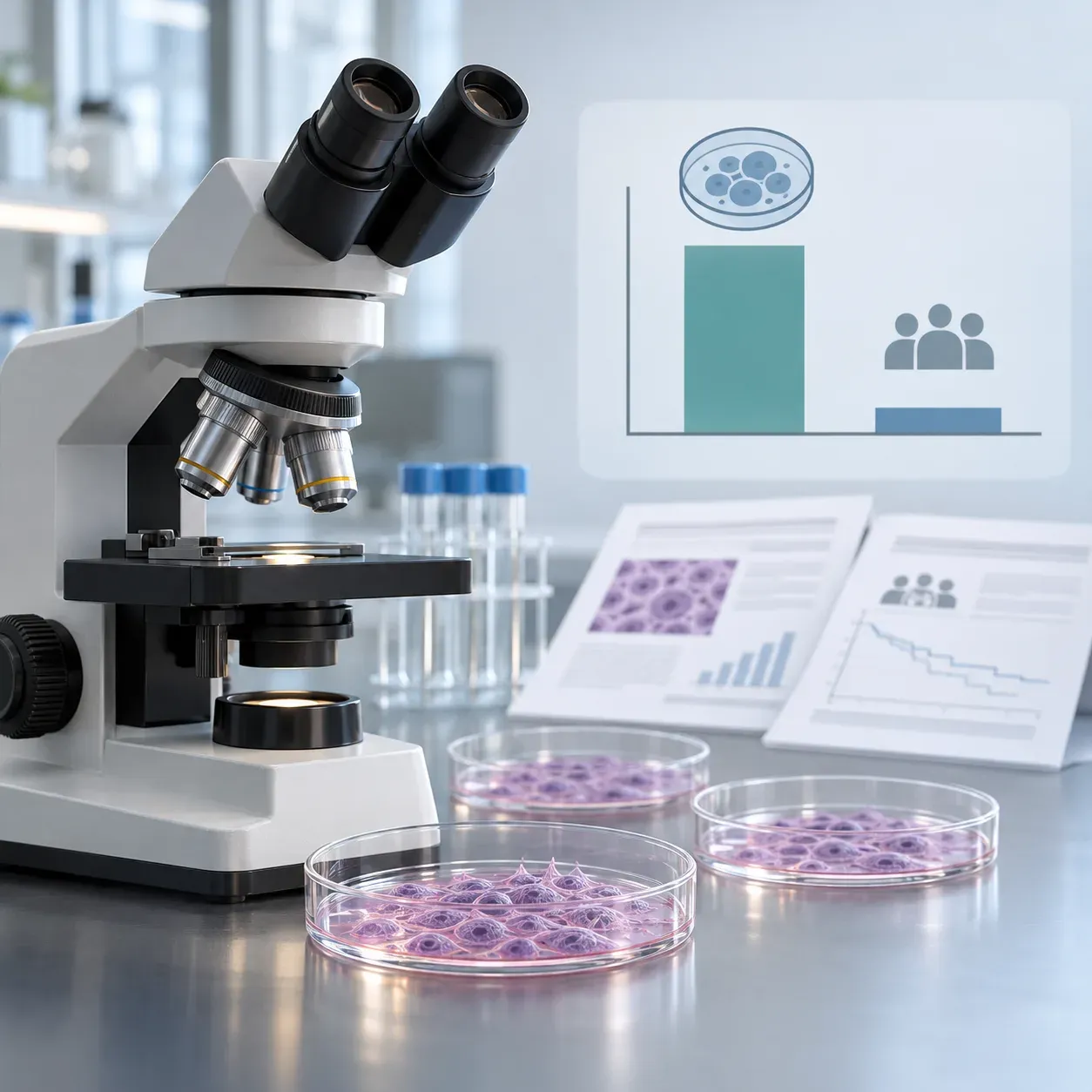
The laboratory findings are not fabricated. Across many published studies, ivermectin has been shown to kill or slow the growth of cells from breast, ovarian, pancreatic, colorectal, and other cancers. Proposed mechanisms include disrupting specific signaling pathways, interfering with cancer stem cells, and triggering cell death. Some studies in mice have shown tumors shrinking.
So why isn’t it a cancer drug? Because “kills cancer cells in a dish” is the beginning of drug development, not the end of it. Thousands of compounds do that. The overwhelming majority fail at the next step, which is showing that the effect can be reproduced in a living human being at a dose that doesn’t harm them.
That next step is where ivermectin runs into a specific and well-documented problem.
The Number That Explains Everything
This is the part most coverage skips, in both directions, and it’s the part that actually settles the question.
The concentrations that work in the lab are generally a few micromolar, with a median around 5 across published studies.
The highest blood concentration achievable in a person taking a standard dose is roughly 0.05 micromolar. That’s about a hundredfold gap.
And the real gap is wider than that, because around 93% of ivermectin in your bloodstream is bound to plasma proteins and can’t reach cells at all. The free, active fraction is a small slice of an already small number.
Can’t you just take more? This has been studied. In a trial giving healthy volunteers doses up to 2 mg/kg, around ten times the standard dose, plasma concentrations reached roughly 0.3 micromolar, still below the levels that affect tumor cells in the lab.
There’s a further problem with the lab data itself. Ivermectin barely dissolves in water, and the concentrations reported as effective sit right at the edge of what will stay in solution. One study found that ivermectin’s apparent cell-killing effect on cervical cancer cells was largely caused by solid particles forming in the culture medium. Filtering those particles out abolished the effect. Separate work has shown that at these concentrations ivermectin disrupts cell membranes non-specifically, which is a different thing from targeted anticancer activity.
In fairness, this isn’t unanimous. Some published reviews, particularly older ones, argue that the effective concentrations are clinically achievable. That view exists in the literature and people citing it aren’t making it up. But the more recent and more careful pharmacological analyses have moved steadily against it, and the solubility findings give a plausible explanation for why some of the original lab results looked stronger than they were.
What’s Actually Being Tested Right Now
There is real research happening, and it’s worth knowing precisely what it is, because it’s narrower than the online claims suggest.
An early-phase trial at Cedars-Sinai has been testing ivermectin combined with immunotherapy drugs in metastatic triple-negative breast cancer. Preliminary findings from the first nine patients were presented in 2025. Nine patients is a very small number and these are not results anyone should act on.
The ICONIC trial is larger, and has not yet started recruiting. Run by the University of Florida, it plans to enroll 80 patients with solid tumors, randomly assigning them to different doses of ivermectin alongside immune checkpoint inhibitors. Its estimated study completion date is December 2027.
Notice what’s being tested. Not ivermectin as a cancer treatment on its own. The hypothesis is that it might make existing immunotherapy work better by changing how the immune system behaves around a tumor. That is a specific, modest, biologically plausible question, and it is not the same claim being made in the videos.
Notice also what a trial means. Participants are monitored, doses are controlled, interactions are checked, and if harm appears, the trial stops. None of that applies to someone buying tablets online.
The Documented Harms
In May 2026, the American Society of Clinical Oncology issued a formal clinical notice stating that ivermectin and fenbendazole should not be used to treat cancer, or alongside established cancer treatment, outside a properly designed clinical trial. Their reasoning was that no robust clinical evidence of benefit exists, while the potential for toxicity and drug interactions is real.
The specific risks are these.
Liver injury. Cases of hepatotoxicity have been reported, which is a particular concern for people whose liver is already handling chemotherapy.
Neurological effects. At high doses, ivermectin can cross into the brain and cause confusion, unsteadiness, seizures, and in severe cases coma. The doses being promoted online for cancer are far above the approved antiparasitic dose.
Drug interactions. Ivermectin is processed by the same liver enzyme system as many cancer drugs. Taking it alongside treatment can alter the levels of either drug, which means your chemotherapy or targeted therapy may not work as intended.
Veterinary formulations. Many people buy animal versions because they’re easier to obtain. These are not made to human pharmaceutical standards, may contain inconsistent amounts of active drug, and may contain other ingredients never tested in people.
Taking it secretly is its own risk. If your oncology team doesn’t know, they can’t check for interactions, and an unexplained change in your liver tests or your response to treatment becomes much harder for them to interpret.
The Risk That Gets Discussed Least
ASCO describes this as the unmeasured risk, and it’s the one that causes the most harm.
Delaying or declining treatment that works, in favor of something that hasn’t been shown to.
Cancer treatment is time-sensitive in a way that most illness isn’t. A few months spent on an unproven alternative can be the difference between a cancer that’s still treatable with intent to cure and one that isn’t. That cost doesn’t show up in any safety database, no one reports it as a side effect, and it is almost certainly the largest source of harm in this entire area.
This is not an argument that your oncologist is always right or that conventional treatment always works. It’s a narrower point: the decision to substitute is irreversible in a way that most medical decisions aren’t, and it’s usually made at the moment someone is most frightened and least able to weigh it calmly.
How to Raise This With Your Team
If you’re considering ivermectin, or already taking it, the most useful thing you can do is say so out loud.
Tell them, even if you expect disapproval. Oncologists are now being specifically advised to ask about this without judgment, because they’d rather know. A good team will check interactions and keep monitoring you rather than lecture you.
Questions worth asking:
- “I’ve read about ivermectin for cancer. Can you tell me what you make of the evidence?”
- “Are there any clinical trials I’d be eligible for, here or elsewhere?”
- “If I wanted to try something additional alongside my treatment, what would actually be safe?”
- “Is there anything about my current plan you’d change if standard treatment stops working?”
If what you’re really asking is whether there’s anything else out there, say that directly. It’s usually the question underneath, and it’s a much more productive conversation than one about a single drug. Clinical trials of genuinely novel treatments are often available and under-discussed, and they come with the monitoring that buying tablets online does not.
A final word. Wanting more options than the ones you’ve been offered is not gullibility. It’s what anyone does when the stakes are this high and the plan on offer feels insufficient. The case against ivermectin isn’t that hoping for something better is foolish. It’s that this particular drug runs into a specific, measurable wall between the dish and the human body, that a trial is underway to test the one version of the idea that still looks plausible, and that in the meantime the realistic outcome of taking it alone is cost, risk, and lost time rather than a cure. If the answer changes in 2027, that will be worth knowing. It hasn’t changed yet.
This page describes the current evidence on ivermectin in cancer as of its review date, and that evidence is actively changing. Ivermectin is approved for parasitic infections, not for cancer, and nothing here should be read as guidance on dosing. If you are taking ivermectin or any supplement alongside cancer treatment, tell your oncology team so they can check for interactions, regardless of what you decide to do next. Do not stop or delay recommended cancer treatment based on anything on this page or anywhere else online without discussing it with your doctors first.
Common questions
Does ivermectin cure cancer?
No. Ivermectin does kill cancer cells in a dish, and has done so in dozens of published experiments, but it has never been shown to work in a person. The American Society of Clinical Oncology has advised that it should not be used to treat cancer, or alongside established cancer treatment, outside a properly designed clinical trial.
Why don't the lab results for ivermectin work in people?
The concentrations that work in the lab are roughly a hundred times higher than anything you can safely achieve in a human body, where a standard dose reaches about 0.05 micromolar in the blood. Around 93% of the ivermectin in your bloodstream is also bound to plasma proteins and can't reach cells at all.
Is there a clinical trial of ivermectin for cancer?
The ICONIC trial, run by the University of Florida, plans to enroll 80 patients with solid tumors and randomly assign them to different doses of ivermectin alongside immune checkpoint inhibitors. Its estimated study completion date is December 2027. It is not testing ivermectin as a cancer treatment on its own, but whether it might make existing immunotherapy work better.
What are the risks of taking ivermectin for cancer?
Reported risks include liver injury, neurological effects at high doses such as confusion, unsteadiness, seizures and in severe cases coma, and interactions that can alter the levels of your cancer drugs. Veterinary versions are not made to human pharmaceutical standards. Almost certainly the largest harm is delaying or declining treatment that works, in favor of something that hasn't been shown to.
Should I tell my oncologist if I'm taking ivermectin?
Yes, even if you expect disapproval. Oncologists are now being advised to ask about this without judgment, and a good team will check interactions and keep monitoring you. If your team doesn't know, an unexplained change in your liver tests or your response to treatment becomes much harder for them to interpret.
Sources
- ASCO Clinical Notice: Recommending Against Ivermectin and Fenbendazole for Cancer Treatment, Outside of Clinical Trials · American Society of Clinical Oncology, 2026 · doi:10.1200/acon.26.000061
- Oncologists Urged to Take Proactive Approach When Discussing Ivermectin, Fenbendazole · American Society of Clinical Oncology, 2026
- Ivermectin Combined With Immune Checkpoint Inhibition in Cancer (ICONIC) · ClinicalTrials.gov, 2026
- Ivermectin in Combination With Balstilimab or Pembrolizumab in Patients With Metastatic Triple Negative Breast Cancer and HR+/HER2- Metastatic Breast Cancer · ClinicalTrials.gov, 2026
- Ivermectin and gynecologic cancer: What’s the data? · Gynecologic Oncology Reports, 2025 · doi:10.1016/j.gore.2025.101803
- Ivermectin-induced cell death of cervical cancer cells in vitro a consequence of precipitate formation in culture media · Toxicology and Applied Pharmacology, 2022 · doi:10.1016/j.taap.2022.116073
- Nonspecific membrane bilayer perturbations by ivermectin underlie SARS-CoV-2 in vitro activity · bioRxiv, 2023 · doi:10.1101/2023.10.23.563088
- Ivermectin as a potential COVID-19 treatment from the pharmacokinetic point of view: antiviral levels are not likely attainable with known dosing regimens · medRxiv, 2020 · doi:10.1101/2020.04.11.20061804
- The Approved Dose of Ivermectin Alone is not the Ideal Dose for the Treatment of COVID-19 · medRxiv, 2020 · doi:10.1101/2020.04.21.20073262
- Ivermectin: Potential Repurposing of a Versatile Antiparasitic as a Novel Anticancer · IntechOpen, 2021 · doi:10.5772/intechopen.99813
- Nurses Advised: ASCO Cautions Against Ivermectin and Fenbendazole Use · Oncology Nursing News, 2026
- STROMECTOL (IVERMECTIN) Tablets · U.S. Food and Drug Administration, 2009