Which Clinical Decision do you Face Frequently?
We’re opening up Aesclea, our longitudinal oncology foundation model, for early clinician evaluation. Trained on some of the richest de-identified EHR data in the world from 280,000 cancer patients at the Mayo Clinic Platform and with over 200 million longitudinal clinical events, Aesclea models outcomes with strong performance across toxicities, admissions, and survival. We believe this model can assist clinicians in:
Stratifying risk at the point of decision
Estimating outcome differences between treatment strategies
Identifying which patients are more or less likely to benefit from a treatment
We are inviting clinicians to submit real-world treatment decisions, such as 'In advanced cancer near end of life, who is unlikely to benefit from continued systemic therapy vs switching to palliative care?'. We believe It's essential that engaging a broad cohort of clinicians is done from the start, enabling the model to stay aligned with clinical practice and deliver clear benefit to patients. In return, we'll provide you with:
Predicted outcome differences between arms
Cohort size and characteristics
Uncertainty and explainability
An invitation to collaborate on upcoming publications
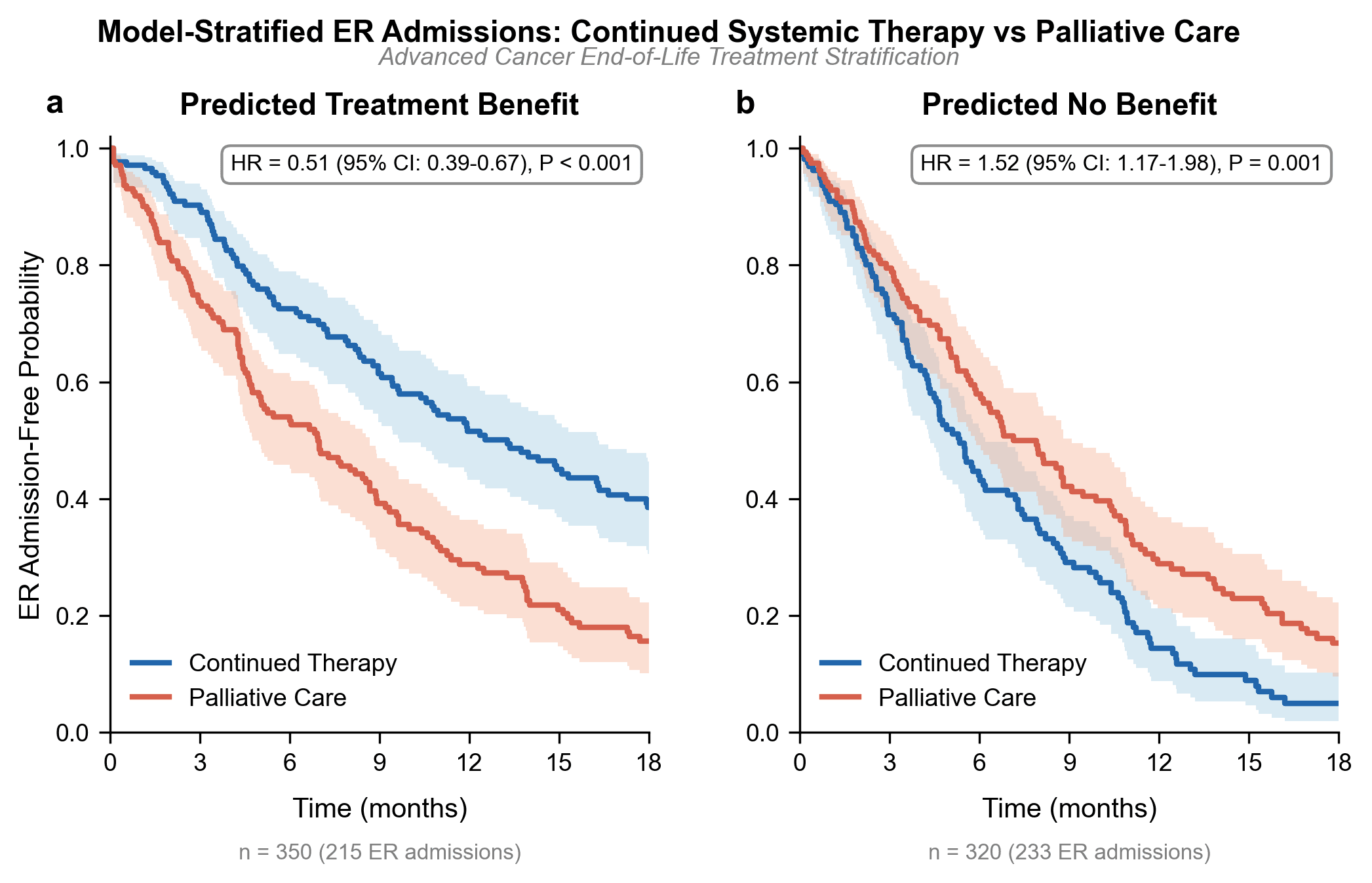
(Synthetic Data)
What to submit
Please describe the clinical questions you face, ideally the outcomes should be heterogenous, faced often, and be meaningful to patients. Please make sure that you clearly define:
Cohort: cancer type, stage/setting, line of therapy, key inclusion/exclusion criteria
Timepoint: diagnosis, post-op
Decision: treatment or strategy A vs B
Outcome of interest: e.g., OS at 12 months, hospitalization within 30 days, grade ≥3 toxicity, treatment discontinuation
Aesclea is currently in early research evaluation and is not ready for direct clinical decision-making or medical advice, but we look forward to evaluating it with you.