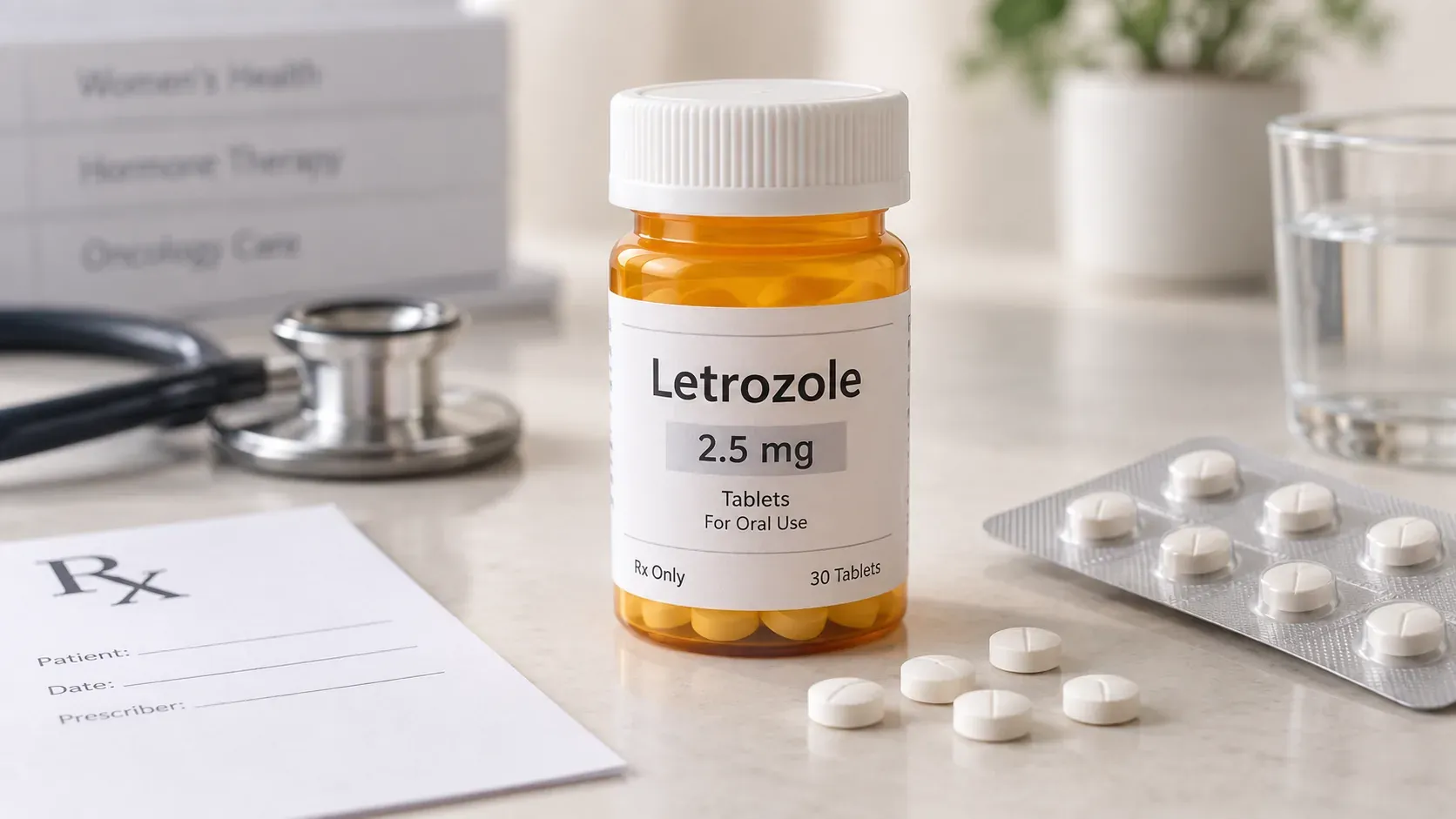
Most people on letrozole experience some combination of joint pain, hot flashes, and fatigue, with joint pain being the one that often catches people off guard. It typically starts within the first few weeks or months and usually eases over time, though there are several evidence-backed treatments if it persists. Bone loss is another key effect to understand early; because it develops silently, it requires proactive monitoring.
If you started this recently and are already wondering how you will manage five years of it, know that almost everyone feels that way at first.
Demystifying Letrozole: Turning Off Estrogen Production
Letrozole is an aromatase inhibitor. After menopause, your ovaries stop being the main source of estrogen, and most of what remains is made in fat, muscle and skin by an enzyme called aromatase, which converts androgens into estrogen. Letrozole blocks that enzyme.
Letrozole blocks estrogen production almost completely. By shutting down over 98% of the aromatase enzyme, it drops circulating estrogen levels by 80% to 90%. If your cancer relies on estrogen to grow, starving it of that fuel is highly effective. The catch? The rest of your body relies on estrogen too, which is why side effects happen.
Understanding these two main consequences helps make sense of what comes next.
First, letrozole only works if your ovaries are not producing estrogen. It is prescribed after menopause, or alongside treatment that switches the ovaries “off”. Taking this medication while your ovaries are still active simply won’t work.
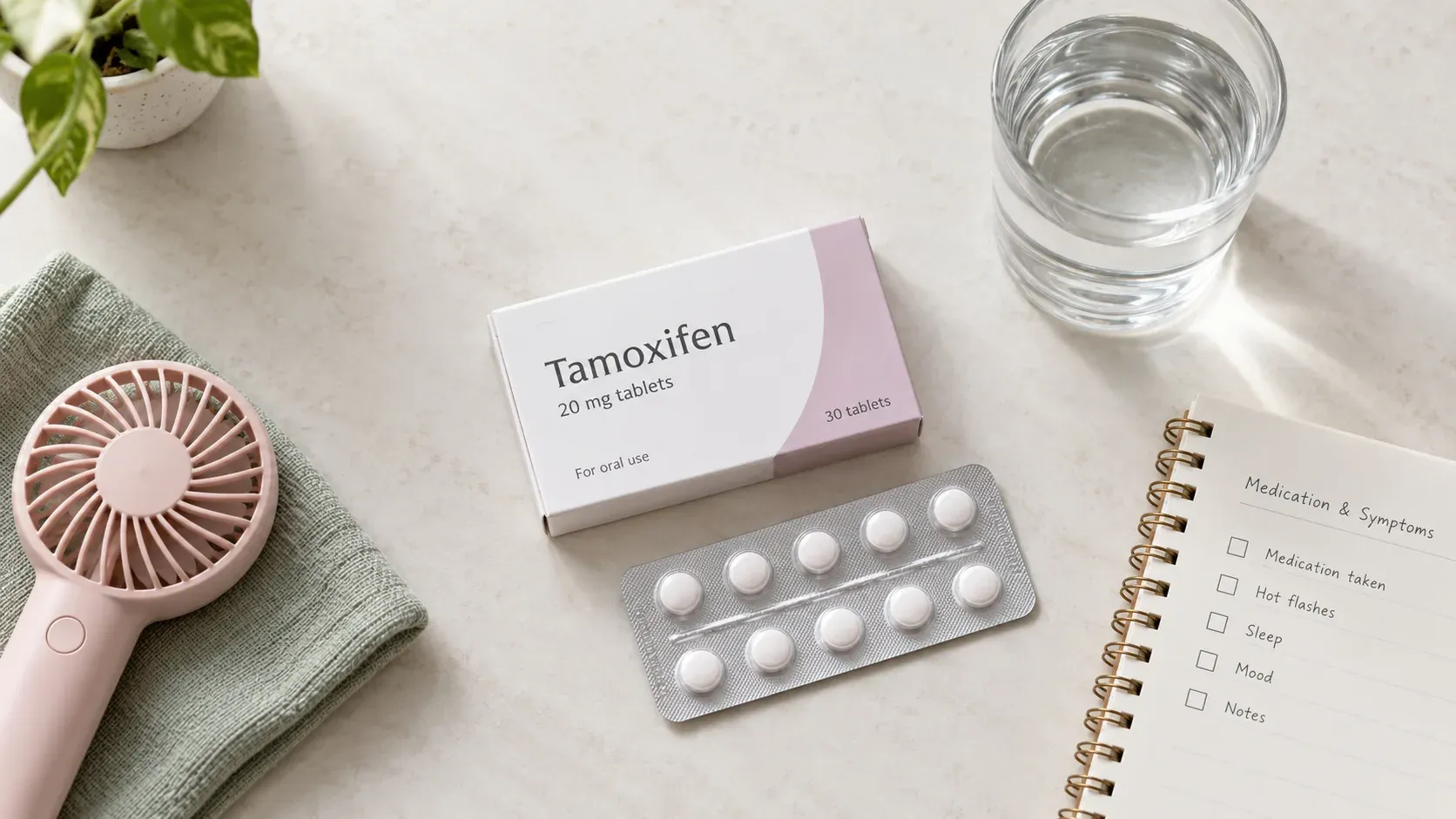
Second, letrozole works differently than tamoxifen in an important way. Tamoxifen blocks estrogen receptors while leaving estrogen circulating in your body; letrozole removes the estrogen entirely. This is why letrozole avoids tamoxifen’s risks of blood clots and uterine issues, but causes more joint pain and bone loss instead. Neither medication is the “gentler” option. They are just difficult in different ways.
Understanding Joint Aches and Protecting Your Bones
These two get their own section because they are the most common reason people stop.
Understanding Joint Stiffness and Easing Daily Aches
There is a name for this, aromatase inhibitor associated musculoskeletal syndrome, usually shortened to AIMSS. Estimates of how common it is vary enormously depending on who is asked and how, from around 20 to 36% in the large randomized trials to over 50% in real-world reports. The gap probably reflects that trials record what gets formally reported, and clinics hear what people actually feel.
It most often affects your hands, wrists, knees, hips, and ankles. Morning stiffness is the classic complaint, along with a weak grip, trouble opening jars, and feeling stiff after sitting still. People also report tendonitis, trigger finger, and carpal tunnel symptoms. These issues usually start within the first few weeks or months of treatment, though the timing varies quite a bit from person to person.
Between 13% and 25% of patients quit aromatase inhibitors mainly because of this pain. That statistic is often framed as patients “failing to follow doctor’s orders,” but it’s better seen for what it actually is: proof that the pain is real and far too often undertreated.
Bone loss is silent
It causes no symptoms until a fracture occurs. That is precisely why doctors monitor it proactively rather than waiting for a problem to arise.
Removing most of your estrogen accelerates bone thinning. In the BIG 1-98 trial, which compared five years of letrozole against five years of tamoxifen, fractures occurred in 8.6% of the letrozole group against 5.8% on tamoxifen. In the MA.17 trial, newly diagnosed osteoporosis affected 8.1% on letrozole against 6.0% on placebo, and hip bone density fell by 3.6% compared with 0.71%.
Those are meaningful differences and they are also manageable ones. Guidelines recommend a bone density scan (DEXA) before starting and repeat monitoring during treatment. If you have not been offered one, ask.
Everything else
Hot flashes and night sweats are common, as are fatigue, vaginal dryness, lower sex drive, headaches, trouble sleeping, low mood, hair thinning, and a slight bump in cholesterol. Many people also report weight gain, though it can be tricky to separate the medication’s effect from the natural impacts of menopause, cancer treatment, and lower activity levels.
Practical Strategies: What Really Helps You Feel Better
Three specific interventions have been rigorously tested in randomized trials for this exact situation, which is far more than can be said for most of the advice out there.
Exercise
A randomized trial of aerobic and resistance exercise in breast cancer survivors with joint pain showed real, meaningful improvement. Exercise has the fewest downsides of any treatment, but it is also the hardest thing to start when your joints already hurt. The usual advice is to start small and build up slowly, and getting a referral to a physical therapist or a specialized cancer exercise program makes it much easier to actually stick with it.
Acupuncture
SWOG S1200 randomized 226 women to real acupuncture, sham acupuncture, or a waiting list. Real acupuncture produced a statistically significant reduction in joint pain. Availability and cost vary, so ask whether your cancer center offers programs.
Duloxetine
The SWOG S1202 study tested this antidepressant, which has double-duties for chronic pain, against a placebo. Over 12 weeks, average joint pain dropped by 0.82 points more on a 10-point scale compared to placebo. While that is a modest improvement, and the drug comes with its own side effects, most patients in the trial still felt the relief made taking it worthwhile.
Two things that did less well are worth knowing. Omega-3 supplements were tested in SWOG S0927 and did not beat placebo overall, though a later analysis found benefit in women with a BMI over 30. And across all of these trials the placebo response was substantial, which tells you something about how much of this pain responds to being taken seriously and treated at all.
To protect your bones, the standard approach includes weight-bearing exercise, getting enough calcium and vitamin D, and, if your DEXA scan shows significant bone loss, adding a bone-strengthening medication like a bisphosphonate or denosumab. This is a routine part of breast cancer care, not an unusual ask.
Timing
Symptoms often ease after the first few months. If yours have not improved by month four or five, that is worth raising rather than enduring, because the options above exist and the alternative is often that people quietly stop taking the drug.
When Expert Opinions Vary
Thinking About Switching Aromatase Inhibitors? Here’s What to Expect
Anastrozole, letrozole and exemestane all block the same enzyme, and in theory switching should change nothing. In practice some people tolerate one better than another. The ATOLL study found improved pain scores after switching, though 28.5% of patients still discontinued. Whether the benefit is real or largely a fresh-start effect is unresolved, and it is a low-risk thing to try.
Treatment Regimen
Five years was standard, and extended treatment to ten years produces additional benefits that are real but smaller than people often assume, while side effects keep accumulating. The right answer depends heavily on your own recurrence risk. This is a conversation, not a rule, and it is reasonable to ask what the benefit looks like in your specific case rather than in general.
Supplements to consider
Glucosamine, vitamin D above replacement levels, and omega-3s are all widely recommended and none has strong trial evidence in this setting. They are not dangerous. They are also not a substitute for the interventions that have been tested.
Now, you are thinking what is next?
Before your next appointment, three things are worth having ready.
- Whether you have had a baseline DEXA scan (a DEXA scan is a quick, painless, low-dose X-ray that measures bone strength and checks for bone thinning; you simply lie on an open table for 10 to 15 minutes while the machine scans your body, making it a very easy way to track your bone health), and when the next one is due
- Keeping a brief note of which joints hurt, what time of day it’s worst, and what activities you’re having trouble with helps your doctor give you clear, specific solutions rather than general advice
- Whether you prefer to start with exercise, acupuncture, or duloxetine, since sharing your preference gives your care team a clear starting point for a personalized treatment plan
Contact your team sooner if you develop sudden severe bone pain, particularly in the back or hip, or pain after a minor fall, since both can indicate a fracture. Also get in touch if your mood has dropped persistently, which is common, treatable, and frequently left unmentioned.
One thing not to do. If the side effects are bad enough that you are considering stopping, tell someone before you stop rather than after. Stopping endocrine therapy early is associated with worse outcomes, and almost every alternative worth trying requires your team to know the problem exists.
The trial figures on this page describe averages across large groups of patients. Your own risk of bone loss, fracture, and joint symptoms depends on your age, your bone density before starting, previous fractures, other medications, and whether you have had chemotherapy. Nothing here should be used to start, stop, or change a dose. Decisions about the length of your treatment and about bone-protective medication belong with your oncology team.
Common questions
How long does letrozole joint pain last?
It usually starts within the first weeks to months. For many people it eases after the first few months, though not for everyone. If yours has not improved by month four or five, that is worth raising rather than enduring, because several treatments have real trial evidence behind them and the alternative is often that people quietly stop taking the drug.
What actually helps with aromatase inhibitor joint pain?
Three things have been tested in randomized trials in exactly this situation. Aerobic and resistance exercise produced meaningful improvement. Acupuncture reduced joint pain significantly in SWOG S1200. Duloxetine reduced average pain by 0.82 points more than placebo on a 0 to 10 scale, a real but modest effect that came with more side effects. Omega-3 supplements did not beat placebo overall.
Does letrozole cause bone loss?
Yes, and it has no symptoms until something breaks, which is why it gets monitored rather than waited for. In the BIG 1-98 trial fractures occurred in 8.6% of the letrozole group against 5.8% on tamoxifen. In MA.17, newly diagnosed osteoporosis affected 8.1% on letrozole against 6.0% on placebo. Guidelines recommend a DEXA scan before starting and repeat monitoring during treatment.
Is letrozole better or worse than tamoxifen?
Neither is the gentler option, they are differently difficult. Tamoxifen blocks estrogen receptors while leaving estrogen in circulation; letrozole removes the estrogen. That is why letrozole does not carry tamoxifen's risks to the uterus or of blood clots, and why it carries more joint pain and more bone loss instead.
Can I switch to a different aromatase inhibitor if letrozole is hard to tolerate?
It is a low-risk thing to try. Anastrozole, letrozole and exemestane all block the same enzyme, so in theory switching should change nothing, but in practice some people tolerate one better than another. Whether the benefit is real or largely a fresh-start effect is unresolved. Tell your team before you stop rather than after, because almost every alternative worth trying requires them to know the problem exists.
Sources
- Aromatase Inhibitor-Associated Musculoskeletal Syndrome: Understanding Mechanisms and Management · Frontiers in Endocrinology, 2021
- Aromatase Inhibitor-Associated Musculoskeletal Symptoms: Etiology and Strategies for Management · CancerNetwork, 2008
- Aromatase inhibitor-associated bone and musculoskeletal effects: new evidence defining etiology and strategies for management · Breast Cancer Research, 2011
- Practical guidance for the management of aromatase inhibitor-associated bone loss · Annals of Oncology, 2008
- Aromatase Inhibitors and Bone Loss · CancerNetwork, 2006
- Bone mineral density in breast cancer patients treated with adjuvant letrozole, tamoxifen, or sequences of letrozole and tamoxifen in the BIG 1-98 study (SAKK 21/07) · Annals of Oncology, 2012
- Predictors of Pain Reduction in Trials of Interventions for Aromatase Inhibitor-Associated Musculoskeletal Symptoms · JNCI Cancer Spectrum, 2021
- Acupuncture for Joint Symptoms Caused by Aromatase Inhibitors · The ASCO Post, 2018
- Adverse Events and Perception of Benefit From Duloxetine for Treating Aromatase Inhibitor-Associated Arthralgias · JNCI Cancer Spectrum, 2021
- Aromatase inhibitors and fracture prevention – do 2017 guidelines work in real world? · BJC Reports, 2024
- Aromatase Inhibitors Musculoskeletal Symptoms (AIMSS) · University of Michigan Health, 2024
- Randomized Exercise Trial of Aromatase Inhibitor–Induced Arthralgia in Breast Cancer Survivors · Journal of Clinical Oncology, 2015 · doi:10.1200/JCO.2014.57.1547