If you’ve switched to exemestane after struggling with anastrozole or letrozole, or you’re starting it fresh and wondering what to expect, there is a key fact most pages skip: exemestane is chemically different from the other two.
That difference matters in real, practical ways. It changes how you need to take your tablet, creates a few unique side effects, and may carry a slightly lower risk of bone density loss. It isn’t necessarily a “gentler” drug, since joint pain, hot flashes, and fatigue remain common, but it does mean that standard advice for letrozole doesn’t always apply here. This guide breaks down what actually makes exemestane distinct and how to manage what comes with it.
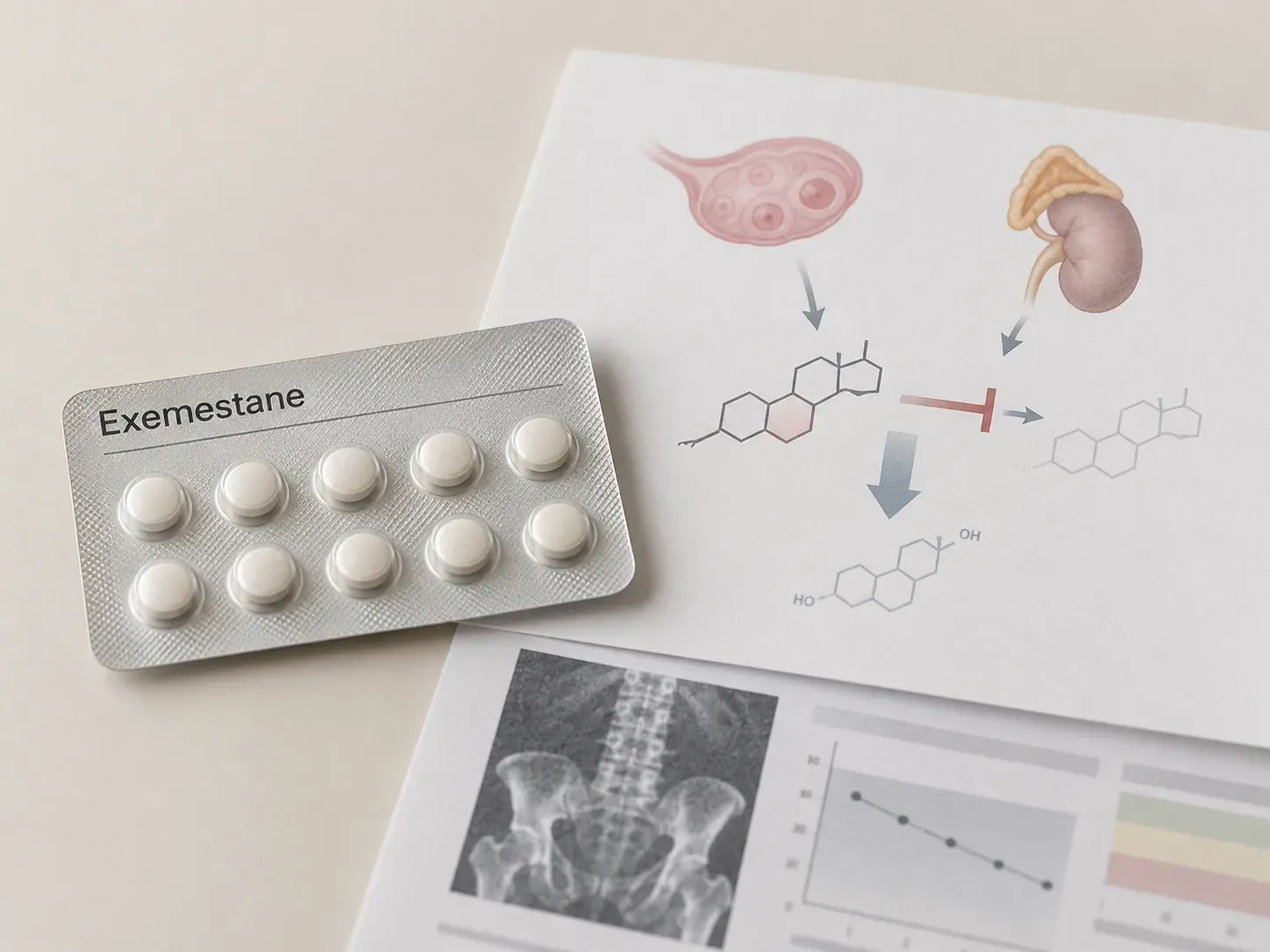
All three primary aromatase inhibitors, anastrozole, letrozole, and exemestane, share the same fundamental job: starving hormone-sensitive breast cancer of estrogen. In postmenopausal women, most estrogen is produced in fat, muscle, and skin by an enzyme called aromatase. These medications shut that enzyme down.
How exemestane shuts it down is where it parts ways with the other two.
The Chemical Difference: A “Suicide” Inhibitor
- Letrozole and Anastrozole (Non-Steroidal): These drugs sit on the aromatase enzyme and temporarily block it like a key jammed in a lock.
- Exemestane (Steroidal Inactivator): Often called a “suicide inhibitor,” exemestane is built to mimic the target enzyme’s natural substrate. Aromatase binds to it by mistake and becomes permanently disabled. To make more estrogen, your body has to rebuild the enzyme from scratch.
This structural difference creates three important practical consequences:
1. You Must Take Exemestane With Food
Exemestane’s absorption is limited on an empty stomach; plasma levels increase by approximately 40% when taken after a meal, particularly one containing healthy fats. The standard dose is one 25 mg tablet daily, taken after eating.
Note: Because letrozole and anastrozole can be taken anytime, patients switching to exemestane are rarely told about this requirement. If you’ve been taking it on an empty stomach, don’t panic. Simply bring it up at your next appointment and adjust your routine going forward.
2. It Has Mild Androgenic Properties
Because exemestane is structurally derived from steroid hormones, it carries weak androgenic (male-hormone-like) characteristics. This explains its unique side-effect profile and is likely why it impacts bone metabolism slightly differently than non-steroidal options.
3. It Overcomes Cross-Resistance
Because exemestane works through a distinct mechanism, cancer that has developed resistance to letrozole or anastrozole may still respond to exemestane. This makes it a useful second-line treatment option.
What Most People Experience
While individual trial statistics vary depending on control groups, the most common side effects fall into a few key areas:
- Hot Flashes & Night Sweats: Sweating is noted in 6% to 19% of patients across major clinical studies.
- Joint & Muscle Pain (AIMSS): Known formally as Aromatase Inhibitor-Associated Musculoskeletal Syndrome, this is the primary reason people discontinue treatment. It typically manifests as morning stiffness, aching in the hands, wrists, knees, and hips, or difficulty gripping objects. In head-to-head trials against tamoxifen, joint pain occurred significantly more often with exemestane.
- Fatigue: Experienced by roughly 22% to 24% of patients.
- Sleep, Mood & Brain Fog: Insomnia, low mood, irritability, dizziness, and headaches frequently interact. Chronic sleep disruption amplifies both joint pain and mood changes.
- Digestive Changes: Nausea and, notably, diarrhea are common. In head-to-head trials against tamoxifen, diarrhea occurred more often in the exemestane group.
- Vaginal Dryness & Reduced Libido: Frequently experienced, under-discussed, but highly treatable.
Exemestane’s Signature: The Androgenic Cluster
Exemestane can cause a unique group of symptoms not usually seen with letrozole or anastrozole:
- Acne or minor breakouts
- Mild hair thinning
- Slight increases in facial or body hair
- Occasional hoarseness
A quick myth-bust: At the standard 25 mg daily dose, these androgenic symptoms affect only a small minority, roughly 2% to 5% of patients, and are typically mild. Alarmist statistics circulating online often stem from early clinical trials that tested 200 mg daily doses (eight times the recommended therapeutic dose). Always treat unverified online numbers with caution.
The Effects You Can’t Feel: Bone, Joints, and Lipids
Unlike hot flashes or joint stiffness, changes to your bone density and cholesterol levels produce no obvious symptoms until something goes wrong, which is precisely why medical teams monitor them closely.
Bone Loss: Real, Immediate, but Potentially Gentler
Bone loss begins quickly after starting treatment. In the bone substudy of the Intergroup Exemestane Study (IES), bone mineral density at the spine dropped by approximately 2.7% within six months of switching to exemestane. Over roughly five years, fractures occurred in 7% of women taking exemestane compared with 5% on tamoxifen, with newly reported osteoporosis occurring in 7.4% versus 5.7%.
However, exemestane may be somewhat easier on bones than non-steroidal aromatase inhibitors:
- Meta-Analysis Evidence: A large network meta-analysis linked exemestane to lower odds of osteoporosis and fractures compared to both anastrozole and letrozole, although none of the differences reached statistical significance.
- Direct Clinical Comparisons: In the MA.27 trial, new-onset osteoporosis was reported in 31% of women on exemestane versus 35% on anastrozole.
- Biological Mechanism: Studies of bone-turnover markers suggest exemestane’s androgenic structure may weakly stimulate bone formation, an effect absent in non-steroidal alternatives.
Important Caveat: “Less bone loss than letrozole” is not the same as “no bone loss.” All aromatase inhibitors increase fracture risk compared to tamoxifen. Make sure to ask your oncology team for a baseline DEXA scan to track your bone health from day one.
Cholesterol Shifts
Aromatase inhibitors can alter lipid profiles over time. Your care team should track your baseline blood work and recheck cholesterol levels periodically during treatment.
Practical Management: What Actually Helps
Managing side effects isn’t just about enduring discomfort.
| Challenge | Evidence-Based Solutions & Action Steps |
|---|---|
| Dosing & Absorption | Take with food daily: Take your 25 mg tablet at the same time every day, immediately following a meal (ideally one containing healthy fats to maximize absorption). |
| Joint Pain (AIMSS) | Exercise & Targeted Therapies: A combination of aerobic and resistance exercise has shown relief in trials. Acupuncture and duloxetine have also demonstrated clinical efficacy in controlled AI trials, so ask for them by name. |
| Bone Density | Protection Plan: Engage in weight-bearing exercises, ensure adequate daily calcium and vitamin D, get a baseline DEXA scan, and discuss bone-protective medications (like bisphosphonates or denosumab) if indicated. |
| Hot Flashes | Medical & Lifestyle Adjustments: Non-hormonal prescription options (such as SSRIs/SNRIs or gabapentin) are thoroughly studied in breast cancer survivors. Layer clothing, keep your bedroom cool, and limit alcohol and caffeine. |
| Vaginal Dryness | Topical Treatments: Start with non-hormonal lubricants and long-acting moisturizers. Discuss local (vaginal) estrogen directly with your oncologist, as its safety profile requires individual medical evaluation. |
| Skin & Hair Changes | Gentle Care: Mild acne and hair thinning usually respond well to standard gentle skincare and over-the-counter interventions. Don’t suffer in silence and report hair changes so your team can assist early. |
Drug Interactions: What Can Interfere
Certain medications accelerate how quickly your liver metabolizes exemestane, reducing its effectiveness in your body.
Strong CYP3A4 Inducers
Key medications and supplements to flag with your pharmacist include:
- Rifampicin (antibiotic)
- Carbamazepine and Phenytoin (anticonvulsants)
- St. John’s Wort (over-the-counter herbal supplement)
Watch Out for St. John’s Wort: Because it is sold over-the-counter as a natural mood supplement, it frequently slips past medical reviews. Always provide every doctor and pharmacist with a complete, updated list of all medications, herbs, and supplements you take.
If a strong CYP3A4 inducer is medically necessary, your oncology team may adjust your exemestane dose to 50 mg daily (still taken after a meal).
Where Exemestane Fits (and What’s Still Debated)
1. The “Switch” Strategy
If side effects like joint pain make anastrozole or letrozole unbearable, switching to exemestane is a standard and safe alternative. In a study of patients who switched between letrozole and exemestane because of side effects, 38.6% stayed on the second drug, for a median of 13.7 months.
Whether this tolerance comes from exemestane’s unique chemistry or a fresh-start placebo effect is still debated, but the practical result is clear: stopping endocrine therapy altogether should never be your first step.
2. Use in Premenopausal Women
Exemestane is also used before menopause when combined with ovarian function suppression (OFS). While the landmark SOFT and TEXT trials proved this combination reduces recurrence more effectively than tamoxifen plus OFS, the quality-of-life trade-off is significant:
- Higher rates of vaginal dryness
- Greater loss of sexual interest
- Increased difficulty with arousal
If you are premenopausal, this risk-benefit calculation deserves a deliberate, open conversation with your care team rather than a quick glance at a brochure.
3. Treatment Duration
Five years remains the standard baseline for exemestane. While extended therapy benefits certain high-risk individuals, longer exposure is linked to a higher risk of fractures, making the optimal timeline a highly personalized calculation.
4. The “Bone Advantage” Debate
While research consistently links exemestane to slightly less bone density loss than letrozole or anastrozole, clinical trials have not yet proved that this translates into significantly fewer fractures. Oncologists weigh this evidence differently based on individual patient risk profiles.
Your Action Plan & Next Steps
When to Contact Your Team Immediately
Reach out to your oncology office promptly if you experience:
- Sudden, severe bone pain (especially in the back or hip, or after a minor fall)
- Debilitating joint pain that interferes with basic daily tasks
- Persistent low mood or depression (frequently unmentioned, highly treatable)
- Persistent diarrhea affecting your hydration
- New or changing vision problems (reported slightly more often with exemestane than tamoxifen)
4 Quick Checks for Your Next Appointment
- Dosing Habits: “Am I consistently taking exemestane right after a meal?”
- Bone Monitoring: “Have I had a baseline DEXA scan, and when is my follow-up scheduled?”
- Routine Labs: “Have my cholesterol and vitamin D levels been rechecked since starting?”
- Unreported Symptoms: “Is there a side effect I’ve stopped mentioning because I assumed nothing could be done?”
A Final Thought
Most of exemestane’s side effects are manageable, and many have interventions supported by solid randomized trial evidence. The greatest risk to your long-term health isn’t the medication itself, it is quietly suffering through side effects until you feel forced to give up treatment entirely.
Reporting symptoms early keeps you comfortable, and staying on therapy protects your health.
This page describes exemestane in general terms. The figures quoted come from clinical trials comparing exemestane with different drugs in different populations, so rates vary between sources and may not reflect your situation. Your own risk of bone loss and fracture depends on your age, your bone density before starting, previous fractures, and whether you have had chemotherapy or ovarian suppression. Nothing here should be used to start, stop, or change a dose. If side effects are making treatment hard to continue, speak to your oncology team about options before stopping.
Common questions
Do I need to take exemestane with food?
Yes. The standard dose is one 25 mg tablet daily, taken after a meal, because exemestane is absorbed better with food. Letrozole and anastrozole can be taken at any time, so people switching are often not told. If you have been taking it on an empty stomach, don't panic. Mention it at your next appointment and adjust your routine going forward.
How is exemestane different from letrozole and anastrozole?
All three starve hormone-sensitive breast cancer of estrogen by shutting down the aromatase enzyme. Letrozole and anastrozole block the enzyme temporarily. Exemestane is a steroidal inactivator: aromatase binds to it by mistake and is permanently disabled, so your body has to rebuild the enzyme from scratch. That difference is why it is taken after food, why it has mild androgenic effects, and why cancer that has stopped responding to the other two may still respond to it.
Does exemestane cause less bone loss than other aromatase inhibitors?
Possibly a little. In the MA.27 trial, new-onset osteoporosis was reported in 31% of women on exemestane against 35% on anastrozole, but trials have not yet shown that this means significantly fewer fractures. Less bone loss is not the same as no bone loss, so ask your team for a baseline DEXA scan.
Can I switch to exemestane if letrozole or anastrozole joint pain is too much?
Switching to exemestane is a standard and safe alternative when joint pain makes anastrozole or letrozole unbearable. Whether better tolerance comes from exemestane's chemistry or from a fresh start is still debated, but stopping endocrine therapy altogether should never be your first step. Talk to your team before you stop.
Which medicines interact with exemestane?
Strong CYP3A4 inducers speed up how quickly your liver breaks exemestane down. The main ones are rifampicin, carbamazepine, phenytoin, and the over-the-counter supplement St. John's wort. If one of these is medically necessary, your oncology team may raise your exemestane dose to 50 mg daily, still taken after a meal.
Sources
- AROMASIN® (exemestane) tablets, for oral use · U.S. Food and Drug Administration, 2018
- Exemestane · BC Cancer Agency Cancer Drug Manual, 2011
- Clinical utility of exemestane in the treatment of breast cancer · International Journal of Women's Health, 2015 · doi:10.2147/IJWH.S69475
- Bone Safety Profile of Steroidal Aromatase Inhibitor in Comparison to Nonsteroidal Aromatase Inhibitors in Postmenopausal Women with Breast Cancer: A Network Meta-Analysis · Breast Care, 2022 · doi:10.1159/000523695
- Effects of steroidal and nonsteroidal aromatase inhibitors on markers of bone turnover in healthy postmenopausal women · Breast Cancer Research, 2007 · doi:10.1186/bcr1757
- Aromatase Inhibitor-Associated Musculoskeletal Syndrome: Understanding Mechanisms and Management · Frontiers in Endocrinology, 2021 · doi:10.3389/fendo.2021.713700
- Endocrinological and clinical evaluation of exemestane, a new steroidal aromatase inhibitor · British Journal of Cancer, 1995 · doi:10.1038/bjc.1995.451
- Exemestane Versus Anastrozole in Postmenopausal Women With Early Breast Cancer: NCIC CTG MA.27—A Randomized Controlled Phase III Trial · Journal of Clinical Oncology, 2013 · doi:10.1200/JCO.2012.44.7805
- Prospective Assessment of Patient Reported Outcomes and Estradiol and Drug Concentration in Patients Experiencing Toxicity from Adjuvant Aromatase Inhibitors · Breast Cancer Research and Treatment, 2017 · doi:10.1007/s10549-017-4260-2
- Patient-reported outcomes with adjuvant exemestane versus tamoxifen in premenopausal women with early breast cancer undergoing ovarian suppression (TEXT and SOFT): a combined analysis of two phase 3 randomised trials · The Lancet Oncology, 2015 · doi:10.1016/S1470-2045(15)00049-2
- Predictors of aromatase inhibitor discontinuation as a result of treatment-emergent symptoms in early-stage breast cancer · Journal of Clinical Oncology, 2012 · doi:10.1200/JCO.2011.38.0261